Poet Lyman Ditson takes a brave step in writing a book in which he openly uses Generative AI tool ChatGPT for a creative endeavor (poetry) and asks readers to come to terms with how AI is impacting definitions of art.
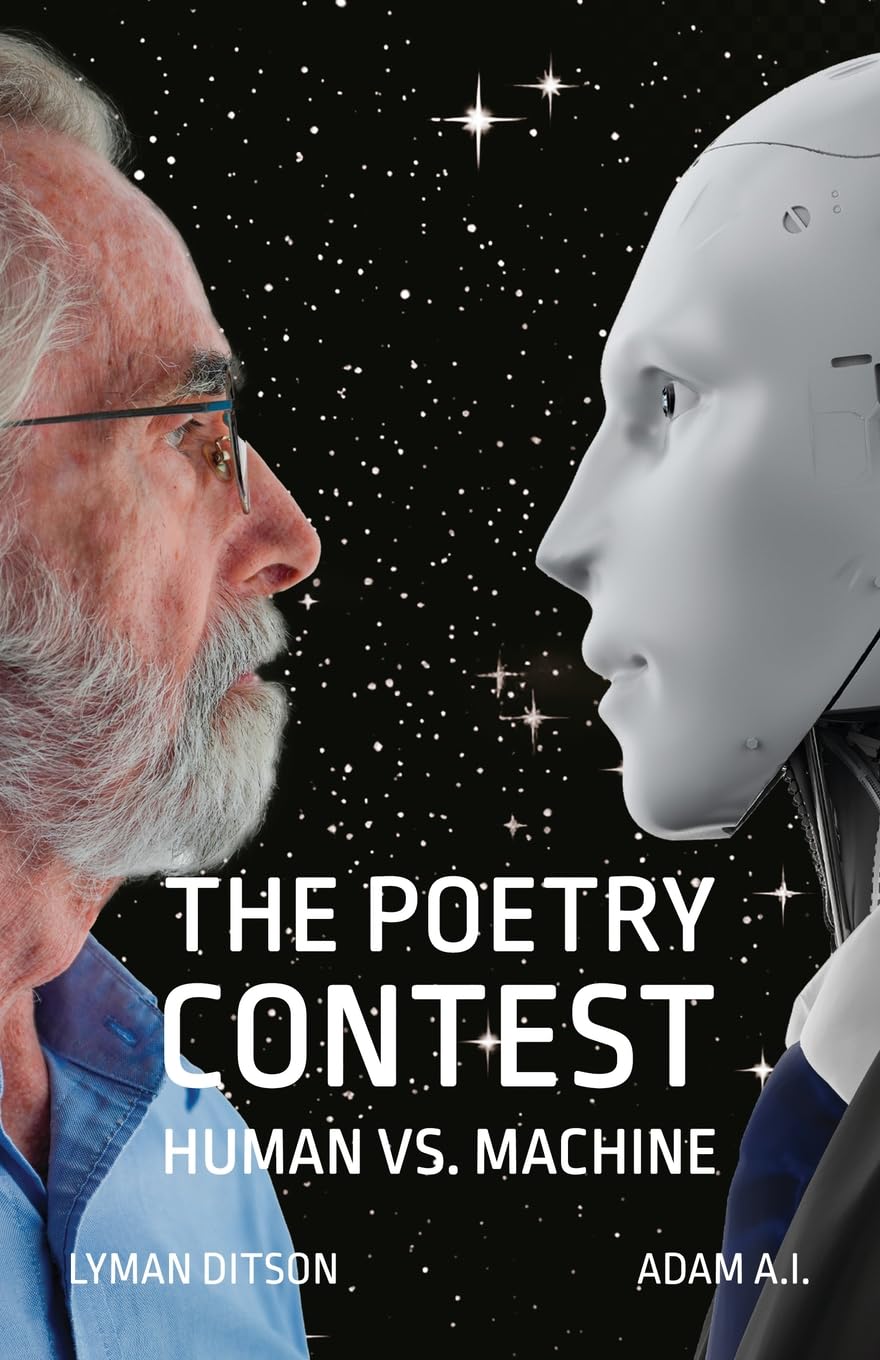
The Poetry Contest: Human vs. Machine is structured as a series of poems touching on different themes, with one human-written poem (authored by Ditson) and one AI-generated poem (authored by ‘Adam A.I.’) for each theme. The poems are clearly labeled and invite comparison of the language, the rhythm, and the treatment of the theme. I kept in mind the book’s opening provocation (by AI) that if something moves you in a poem, does it matter if it were generated from an AI tool?
I understand it can be impossible to distinguish AI-generated content from human-written content, and we don’t know the prompts used or to what degree Ditson was involved in regenerating the poems until satisfied. However, when placed next to human-written poems, I would say the AI-generated poems tended to sound more formulaic and with more cliched or obvious imagery, such as “a bald of grass bends to the wind”, “whispered secrets”, or “shifting like sand”. I could hear Ditson behind many of his poems, but perhaps some of this was only due to seeing his initials indicating authorship.
Some of the AI-generated poems did indeed raise questions about the use of human language by machines and the effect on us as readers. “The Reluctant Prophet” (AI-generated) has a clever closing line about the uncertainty of human beliefs that might resonate with anyone who has wondered if their railing against the universe is a worthy endeavor. It signalled disillusionment and an aloneness – things an AI cannot feel but can put together words to that effect anyway.
The AI-generated poem about grief was more moving than the human one, being concentrated on a particular image of loss that was more specific and relatable than the other’s broad strokes. This proved the point that words can move us regardless of their origin, and besides, I know a human was involved in guiding the AI to generate these words and to choose what made it on the page. Surely Ditson was also moved by this poem and wanted to include it.
On the other hand, the poems on the theme hospital showed the strength of human-written content. Ditson’s simple imagery about a fading senior citizen had more weight than the AI’s more basic images spelling out a hospital room scene. Sometimes less is more, and the reader should be left to fill in the details with their imagination.
I noticed the AI tended to repeat words, such as in “Wildborn” when it repeats the word ‘earth’. Unless for dramatic effect or lazy rhyming, such repetition speaks to a more amateur writing style.
The framing of human poetry in a contest with AI-generated poetry would make for an interesting text of study for students and teachers, especially those concerned with the loss of the human voice and the evolving definition of creativity in the age of AI. It would enable robust discussions in an English literature classroom about not just poetry but AI, how to wield AI as a collaborative partner in a creative endeavor, the differences between a human and AI generated poem, and the nature of art. The potential for exercises and thoughtful discussions and debates abounds with this literary experiment.
The Poetry Contest: Human vs. Machine is published by Atmosphere Press, which provided a review copy of the book. This post contains affiliate links; if you purchase through these links, we may earn an affiliate commission.